

Cart
0
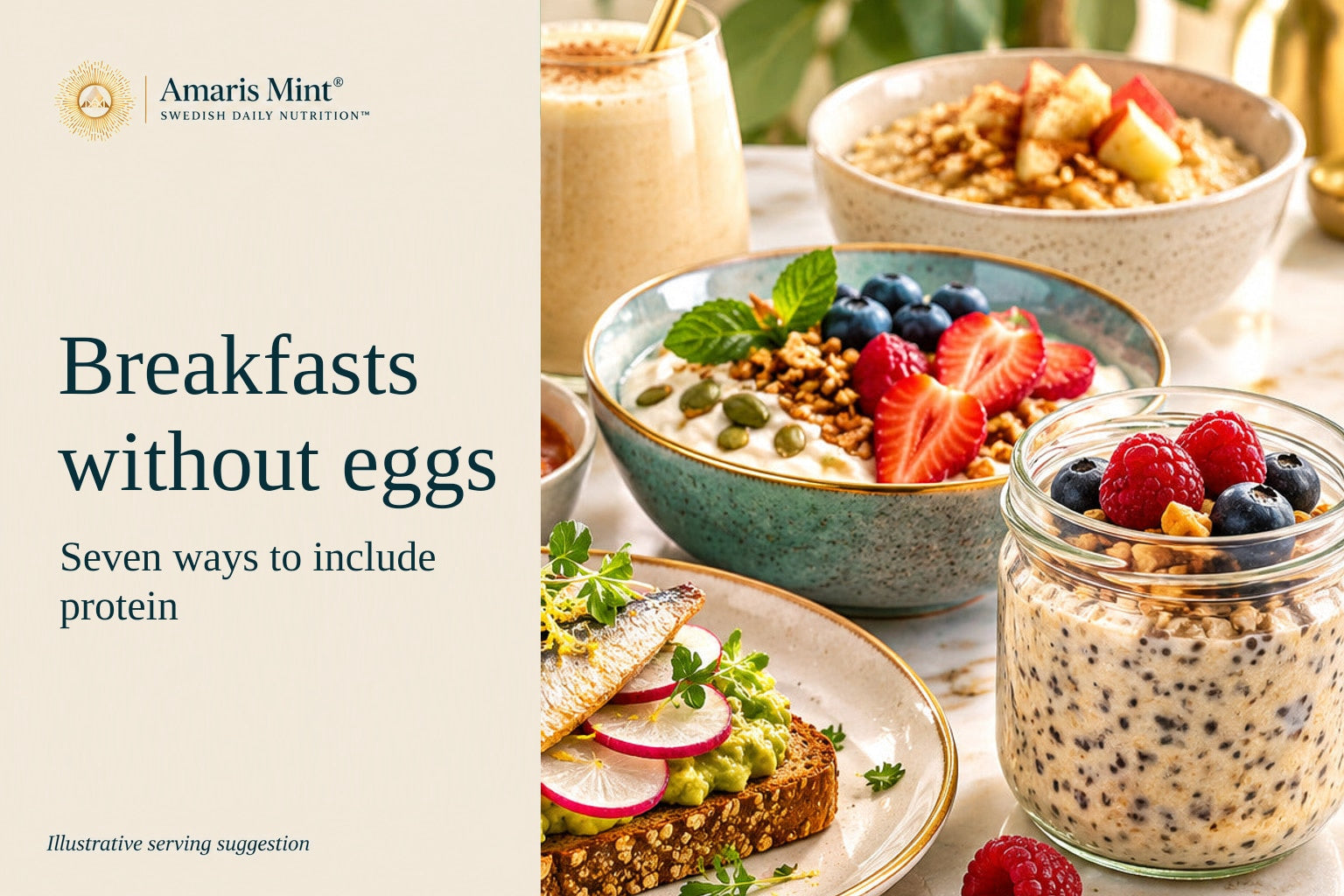
Cover: Breakfast illustration. Dishes and toppings differ from the recipes below; follow the listed ingredients and quantities.
You do not need eggs to include protein at breakfast. Start with yoghurt, cottage cheese, tofu, beans, lentils, soya foods or fish, then choose the preparation that suits your morning.1
The seven ideas below include sweet bowls, savoury toast and warm options. Each provides starting quantities for one adult, not a prescribed portion or a fixed protein target. These meal suggestions have not been kitchen tested. Times are planning estimates and vary with ingredients and equipment; no meal protein or calorie totals are claimed.
Choosing for an egg allergy? These ideas omit egg as an intentional ingredient, but that is not an allergy safety guarantee. Check every pack, including precautionary statements, and avoid cross contamination. A vegan label alone does not establish that a product is free from egg or other allergens.2
Choose by the time you have
| Breakfast | Allow approximately |
|---|---|
| Skyr with cherries and oats | 5 to 10 minutes |
| Cottage cheese, pepper and rye toast | 5 to 10 minutes |
| Tofu and spinach wrap | 15 to 20 minutes |
| Chickpea and tomato toast | 5 to 10 minutes with ready to eat chickpeas |
| Lentil and tomato savoury oats | 15 to 20 minutes |
| Soya yoghurt, apple and almond bowl | 5 to 10 minutes |
| Sardine, cucumber and lemon toast | 5 to 10 minutes |
Follow longer pack cooking instructions where needed. Allow extra time for clearing up. The cold bowls suit mornings without cooking; the wrap and savoury oats need a hob.
1. Skyr with cherries and oats
Sweet, with no cooking
Starting ingredients: 200 g plain skyr, 80 g fresh cherries weighed after removing the stones, and 25 g oats suitable for eating without cooking.
Preparation: Wash and stone the cherries before weighing the edible portion. Spoon the skyr into a bowl and add the cherries and oats. Use oats whose instructions allow uncooked preparation.
What to check: Yoghurt products vary. Compare the nutrition for the amount you use. A coconut or oat alternative does not automatically provide the same nutritional contribution as skyr.
Allergens: milk and oats, a cereal containing gluten. Check all labels and precautionary statements.
2. Cottage cheese, pepper and rye toast
A savoury option with dairy
Starting ingredients: 150 g plain cottage cheese, 70 g rye bread weighed before toasting, and 80 g red pepper after removing the stalk and seeds.
Preparation: Toast the bread. Wash, deseed and finely slice the pepper. Spread the cottage cheese over the toast and add the pepper just before eating.
What to check: Rye bread can also contain wheat or other ingredients. For breakfast away from home, carry the chilled topping separately and assemble when ready to eat.
Allergens: milk and rye, a cereal containing gluten. Check the bread for wheat, sesame and any other ingredients or precautionary warnings.
3. Tofu and spinach wrap
A warm option built around tofu
Starting ingredients: 150 g drained firm tofu, one 60 g wholemeal wheat wrap, 50 g spinach, 80 g tomatoes and 5 g olive oil.
Preparation: Drain and crumble the tofu. Wash the spinach and tomatoes, then chop the tomatoes. Warm the oil in a nonstick pan over a medium heat. Cook the tofu following its pack directions, then add the tomatoes and spinach. Stir until the spinach has wilted and the filling is hot throughout. Warm the wrap as directed, add the filling and fold to serve.
What to check: Firm, silken and flavoured tofu have different textures and instructions. The estimate allows 15 to 20 minutes overall, but use the cooking time on your tofu pack when it is longer.
Allergens: soya and wheat, a cereal containing gluten. Check the wrap for other ingredients and precautionary statements.
4. Chickpea and tomato toast
A cupboard based starting point
Starting ingredients: 120 g drained cooked tinned chickpeas, 70 g wholemeal bread, 100 g tomatoes and a little lemon juice to taste.
Preparation: Use chickpeas labelled ready to eat, or prepare them as the tin directs. Toast the bread while you wash and chop the tomatoes. Mash the drained chickpeas with a fork and a little lemon juice, spread over the toast and add the tomatoes.
What to check: The quantity is cooked chickpeas, not dried chickpeas. A prepared hummus substitution changes the ingredients and may introduce sesame through tahini.
Allergens: wheat, a cereal containing gluten. Check any seasoning, prepared spread and precautionary statements.
5. Lentil and tomato savoury oats
A warm bowl with a separately prepared topping
Starting ingredients: 40 g rolled porridge oats, 300 ml water for the oats, 120 g drained cooked tinned green lentils, 100 g tomatoes and up to two tablespoons of additional water for the topping.
Prepare the topping: Wash and chop the tomatoes. Place them in a small pan with one tablespoon of water and heat gently until softened, stirring and adding the remaining tablespoon if needed to prevent sticking. Add the drained cooked lentils and heat according to their tin instructions, until steaming hot throughout.
Prepare the oats: In another saucepan, mix the oats with the 300 ml water. Bring to the boil, reduce to a simmer and stir regularly for about five minutes. This starting ratio and simmering time follow Quaker Traditional Rolled Oats instructions; use your own pack directions if they differ.5
Serve: Spoon the lentil and tomato topping over the cooked oats. Keep the topping separate until serving so its liquid does not determine the porridge texture. If the oats become too thick while the topping heats, stir in a little hot water.
What to check: Use cooked tinned lentils, not raw dried lentils. The complete combination has not been kitchen tested. The 15 to 20 minute allowance is an estimate; ingredient and pan differences affect the result.
Allergens: oats, a cereal containing gluten. Check all packs and any seasonings. Stock cubes can introduce additional allergens and are not included here.
6. Soya yoghurt, apple and almond bowl
Sweet, with a soya yoghurt alternative
Starting ingredients: 200 g plain soya yoghurt alternative, 100 g apple after removing the core, 30 g muesli suitable to eat without cooking and 15 g almonds.
Preparation: Wash and core the apple, then chop it. Spoon the soya yoghurt alternative into a bowl and add the apple, muesli and almonds.
What to check: Compare the soya product’s nutrition panel rather than assuming all plant alternatives supply similar protein. Muesli can contain milk, nuts and several cereals. This meal is not described as dairy free; choose each exact ingredient for your dietary requirements.
Allergens: soya and almonds, plus the cereals and any other allergens in your muesli. A vegan label is not an allergy safety guarantee.2
7. Sardine, cucumber and lemon toast
A savoury fish option
Starting ingredients: 90 g drained tinned sardines, 70 g wholemeal bread, 80 g cucumber and lemon juice to taste.
Preparation: Toast the bread. Follow the sardine tin instructions and drain as appropriate. Wash and slice the cucumber. Place the fish on the toast, add cucumber and finish with lemon juice. Check for bones and remove any you do not wish to eat.
What to check: Sardines in oil, brine or tomato sauce have different ingredients and nutritional profiles. Use the drained weight. This is a fish option, not a vegetarian breakfast.
Allergens: fish and wheat, a cereal containing gluten. Check the sauce, bread and precautionary statements.
Replace the role of the egg, not just the ingredient
For a savoury texture, try tofu. For a quick chilled bowl, try yoghurt. For cupboard ingredients, start with cooked beans or lentils. These are practical alternatives, not nutritionally identical replacements.
Read the nutrition panel for the amount you actually use. A small nut or seed topping is not automatically equivalent to the main protein food in another meal. Our protein foods guide explains portions.
Keep preparation and storage simple
Keep chilled ingredients at 0 to 5°C and follow use by dates and instructions after opening. Assemble fresh where practical. Cool cooked leftovers and refrigerate within one to two hours; eat them within 48 hours or freeze them. Reheat only once, until steaming hot throughout.3, 4
For an egg allergy, check products each time and prevent cross contamination through shared utensils, surfaces or equipment.2
Choose two ideas for the coming week
Start with one sweet and one savoury option that suit your diet. Check what you already have and choose portions and preparation steps that fit your morning.
For recipes with documented food nutrition estimates, explore our seven protein rich breakfast ideas. For the wider daily context, read how much protein women need per day.
No protein powder is required. A product mentioned elsewhere on this website must not be assumed suitable for an egg allergy.
Made in Sweden. BioBoost Balance+ Protein™ is Amaris Mint®’s Daily Nutrition Protein.
References
- NHS, The Eatwell Guide, protein foods, dairy and alternatives.
- Food Standards Agency, Understanding food labelling, allergens.
- Food Standards Agency, How to chill, freeze and defrost food safely.
- Food Standards Agency, Cooking your food, leftovers and reheating.
- Quaker UK, Traditional Rolled Oats, manufacturer directions for the oat and water base only, not a test of the complete lentil breakfast.
