

Cart
0
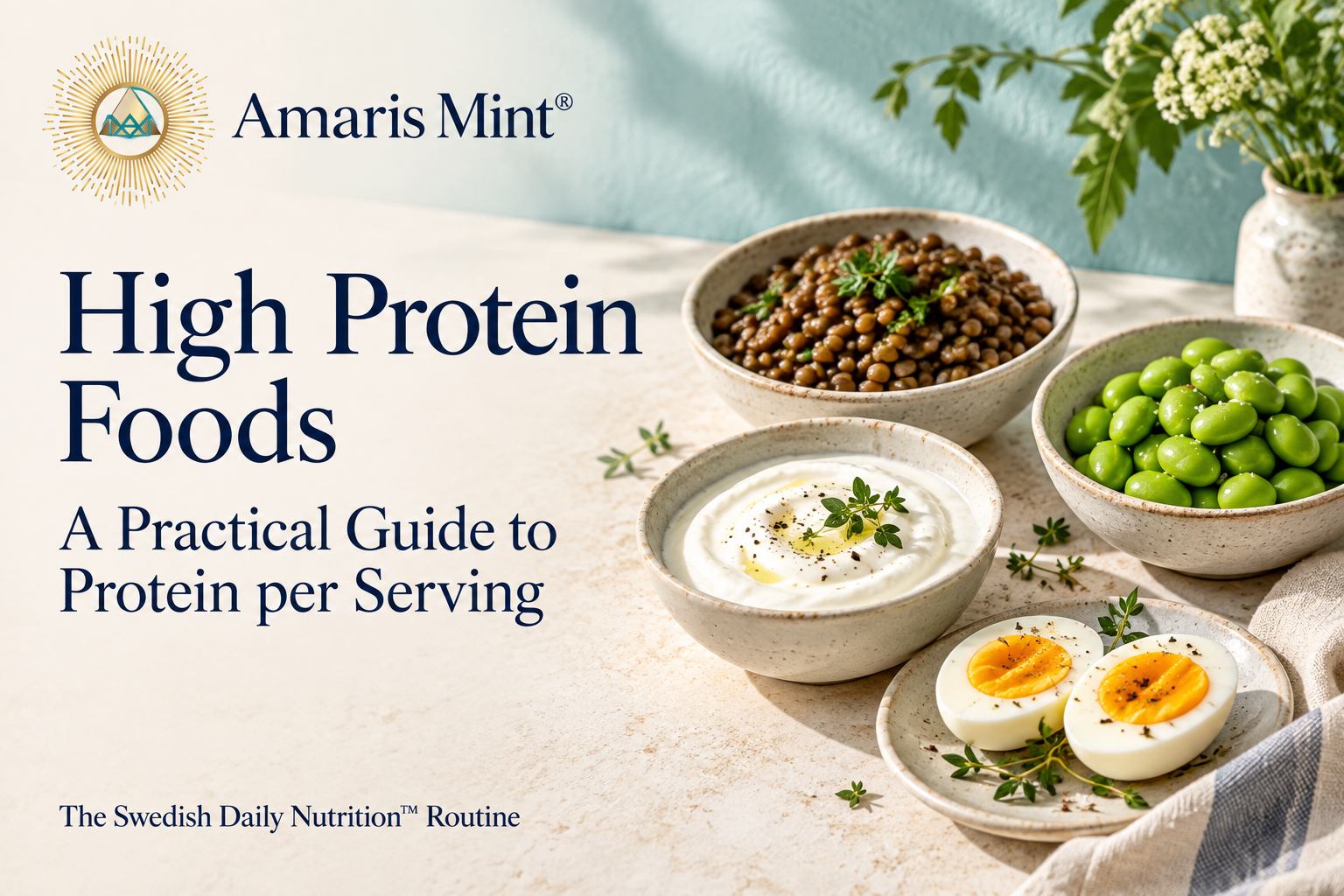
Knowing which foods contain protein is useful. Knowing roughly how much they provide in the portion you actually eat is more useful.
This guide compares familiar animal and plant foods using practical serving examples. The figures are approximate because brands, varieties, cooking methods and drained weights can change the final value.
At a glance
| Food | Example portion | Approx. protein |
|---|---|---|
| Chicken breast, roasted | 100 g | 32 g |
| Tuna, canned in water, drained | 100 g | 25 g |
| Salmon, baked | 100 g | 24 g |
| Lean beef, cooked | 100 g | 29 g |
| Greek-style yoghurt, 0% fat | 170 g | 17 g |
| Cottage cheese | 150 g | 18 g |
| Eggs | 2 medium | 13 g |
| Tofu, firm | 150 g | 18 g |
| Tempeh | 100 g | 20 g |
| Lentils, cooked | 150 g | 12 g |
| Chickpeas, cooked | 150 g | 11 g |
| Edamame, cooked | 100 g | 12 g |
| Pumpkin seeds | 30 g | 9 g |
Important: These are rounded examples for meal planning, not label declarations. Check the pack when you need the value for a specific product.
Animal protein foods
Chicken and turkey
Skinless poultry is a concentrated source of protein. A 100 g cooked portion of chicken breast can provide around 30 g or more, depending on preparation.
It works well in lunches and dinners because the portion can be built around vegetables, grains, potatoes or pulses rather than treated as the entire meal.
Fish
Salmon, tuna, cod and other fish provide substantial protein. Oily fish such as salmon also contribute long-chain omega-3 fatty acids. The NHS recommends at least two portions of fish a week, including one portion of oily fish, although some groups have additional limits or advice.2
Eggs
Two medium eggs provide roughly 13 g protein. Eggs are useful when you want a quick meal, but they do not need to carry the whole protein load alone. Pairing them with yoghurt, cottage cheese, beans or wholegrain toast can increase the total.
Milk, yoghurt and cottage cheese
Dairy foods can make protein easier to distribute across the day. Plain yoghurt or cottage cheese can work at breakfast, lunch or as a snack, while also contributing calcium.
Plant protein foods
Tofu and tempeh
Soya foods are useful plant protein options. Firm tofu varies significantly by brand, so check the label rather than assuming every 150 g serving contains the same amount.
Tempeh is generally more protein-dense than many cooked pulses and can work well in stir-fries, grain bowls and salads.
Lentils, chickpeas and beans
Pulses provide protein alongside fibre and can be used as the main protein source or combined with other foods. The NHS Eatwell Guide specifically encourages beans and pulses as useful alternatives to meat.1
Edamame
Edamame can add protein to salads, noodle dishes and grain bowls. A 100 g cooked serving provides roughly 12 g protein.
Nuts and seeds
Nuts and seeds contain protein, but they are also energy-dense. They work best as one component of a meal or snack rather than being treated as a direct substitute for a larger serving of poultry, fish, dairy, tofu or pulses.
Protein quality: do you need to combine foods?
Animal proteins and soya are generally described as complete proteins because they provide all indispensable amino acids in useful proportions. Individual plant foods vary in amino-acid profile and digestibility.
You do not need to combine complementary plant proteins at every meal. A varied diet across the day can provide the necessary amino acids when overall energy and protein intake are adequate.3
How much protein do you need?
Food tables only become useful when placed in the context of your overall needs.
For adults aged 19 and over, the UK Reference Nutrient Intake for protein is 0.75 g/kg body weight per day.4 A 60 kg adult would therefore have a reference intake of about 45 g/day; a 70 kg adult about 52.5 g/day.
Needs can differ with age, activity, pregnancy, breastfeeding and clinical circumstances. Our guide to women’s daily protein needs explains those differences in more detail.
How to build a protein-containing meal
A simple food-first approach is:
- Choose the main protein source. For example, eggs, fish, poultry, tofu, tempeh, yoghurt or pulses.
- Add plants. Include vegetables, fruit or salad according to the meal.
- Add a starchy carbohydrate where it fits. Potatoes, oats, rice, pasta or wholegrain bread can help make the meal satisfying.
- Use fats, herbs and seasonings for flavour.
The aim is not to turn every plate into a calculation. It is to make protein visible enough in your routine that you are not relying on one meal to provide most of the day’s intake.
Food versus protein powder
Protein powders can be convenient, but they are not nutritionally identical to a varied meal.
Whole foods can provide fibre, essential fats, vitamins, minerals and other food components alongside protein. A powder can be useful when time, appetite or portability makes a conventional meal difficult.
Our protein powder versus food guide compares the two approaches.
Commercial disclosure: Amaris Mint® sells BioBoost Balance+ Protein™. This article is educational and does not imply that a protein powder is required to meet normal protein needs.
Putting it together
Start with foods you already eat. If breakfast is low in protein, add eggs, yoghurt, cottage cheese or a suitable plant alternative. At lunch and dinner, make the protein source easy to identify. Use snacks only where they help bridge a genuine gap.
For meal ideas, explore our 7 high-protein breakfasts, high-protein snacks guide and 7 high protein dinners for busy evenings.
Amaris Mint® | The Swedish Daily Nutrition™ Routine.
References
- NHS. The Eatwell Guide. Accessed 14 September 2026.
- NHS. Fish and shellfish. Accessed 14 September 2026.
- Mariotti F, Gardner CD. Dietary Protein and Amino Acids in Vegetarian Diets—A Review. Nutrients. 2019;11(11):2661.
- Department of Health. Dietary Reference Values for Food Energy and Nutrients for the United Kingdom. Report on Health and Social Subjects 41. 1991.
- Public Health England. Composition of Foods Integrated Dataset (CoFID). 2021.
About the figures: Approximate protein values are rounded from UK food-composition data and representative current product labels where a generic CoFID item does not map cleanly to a practical serving.5 Values vary by brand and preparation.