

Cart
0
Research & Insights
How Much Protein Is in Porridge Made with Water, Milk or Soya?
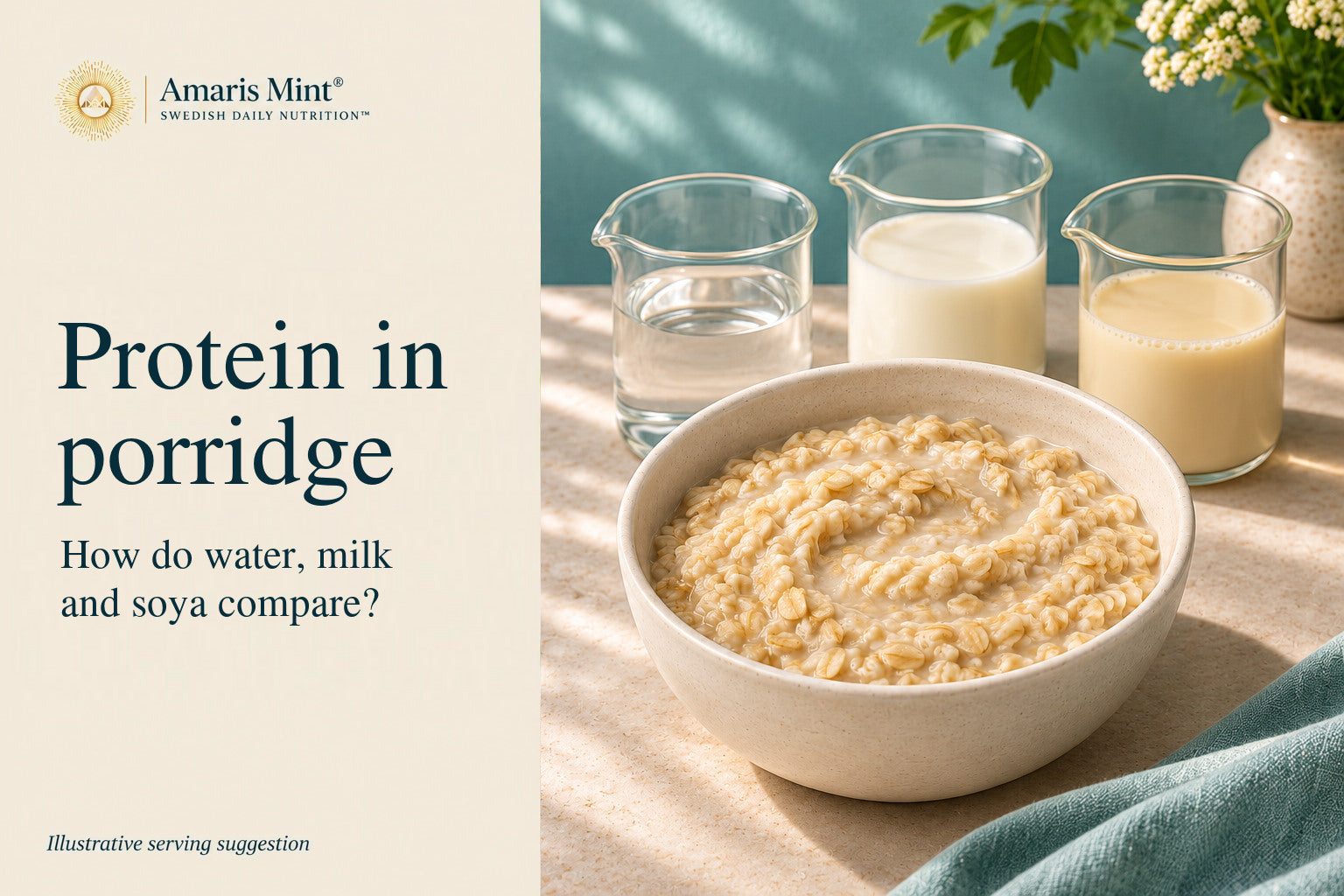
A 40 g portion of Quaker rolled oats provides 4.4 g of protein. The pack’s hob directions use 300 ml of liquid. With water the bowl still provides 4.4 g. With 300 ml of Graham’s semi-skimmed milk it provides about 15.2 g, or about 14.3 g with the same volume of Alpro Soya No Sugars chilled drink.1,2,3
Three versions of the same bowl
| Liquid for 40 g dry oats | Protein from liquid | Protein per bowl |
|---|---|---|
| 300 ml water | 0 g | 4.4 g |
| 300 ml Graham’s semi-skimmed milk | 10.8 g | 15.2 g |
| 300 ml Alpro Soya No Sugars | 9.9 g | 14.3 g |
These are calculated estimates for the whole bowl, before toppings. The labels give 11 g protein per 100 g dry oats, 3.6 g per 100 ml milk and 3.3 g per 100 ml soya drink. A different oat or drink may give a different answer.1,2,3
Why dry oats and cooked porridge give different numbers
A bowl gets heavier as the oats take up liquid. Comparing 100 g cooked porridge with 100 g dry oats therefore compares two very different amounts of oats. For a calculation you can repeat, weigh the oats before cooking and measure the liquid you add. A splash of water to loosen the porridge changes the texture while leaving the bowl’s protein total the same.
If you prefer half milk and half water, the arithmetic is quick. The oats still give 4.4 g. For 150 ml of the same milk and 150 ml of water, add 5.4 g from the milk. The bowl provides about 9.8 g. Look for the per-100-ml column on your actual carton. The NHS guide to food labels explains how standard amounts and serving figures are displayed.4
Choose the version you enjoy making
For a lighter bowl with a clear oat flavour, start with water and finish with fruit. If you prefer creamier porridge, use milk or an unsweetened soya drink from the start. Stir at the bottom of the pan as it heats. Follow the oat pack’s cooking directions and add water if you prefer a looser finish.
Toppings are another way to change the bowl. Stirring 100 g of Arla Natural Skyr into the water-based version at the table takes it from 4.4 g to about 14.4 g of protein. A spoonful of skyr also cools a steaming bowl, so leave a little room before adding it. The British Heart Foundation’s porridge guide has other topping ideas.5,6
A warm bowl and a cold shake
If you already use Amaris Mint® BioBoost Balance+ Protein™ Vanilla, prepare the shake separately with the liquid and amount on your pouch. This lets you keep the texture of your usual porridge and calculate the drink separately. For example, if you divide one measured jug of milk between the oats and the shake, include that jug once in your breakfast total. Our guide to protein powder in porridge and hot drinks explains why the directions for the finished blend matter.
For another side-by-side comparison, see oat milk versus soya milk. The dairy bowl contains milk, the soya bowl contains soya, and all three contain oats. The named Quaker pack also flags possible wheat and barley.1
