

Cart
0
Research & Insights
How to Choose the Best Protein Powder in the UK
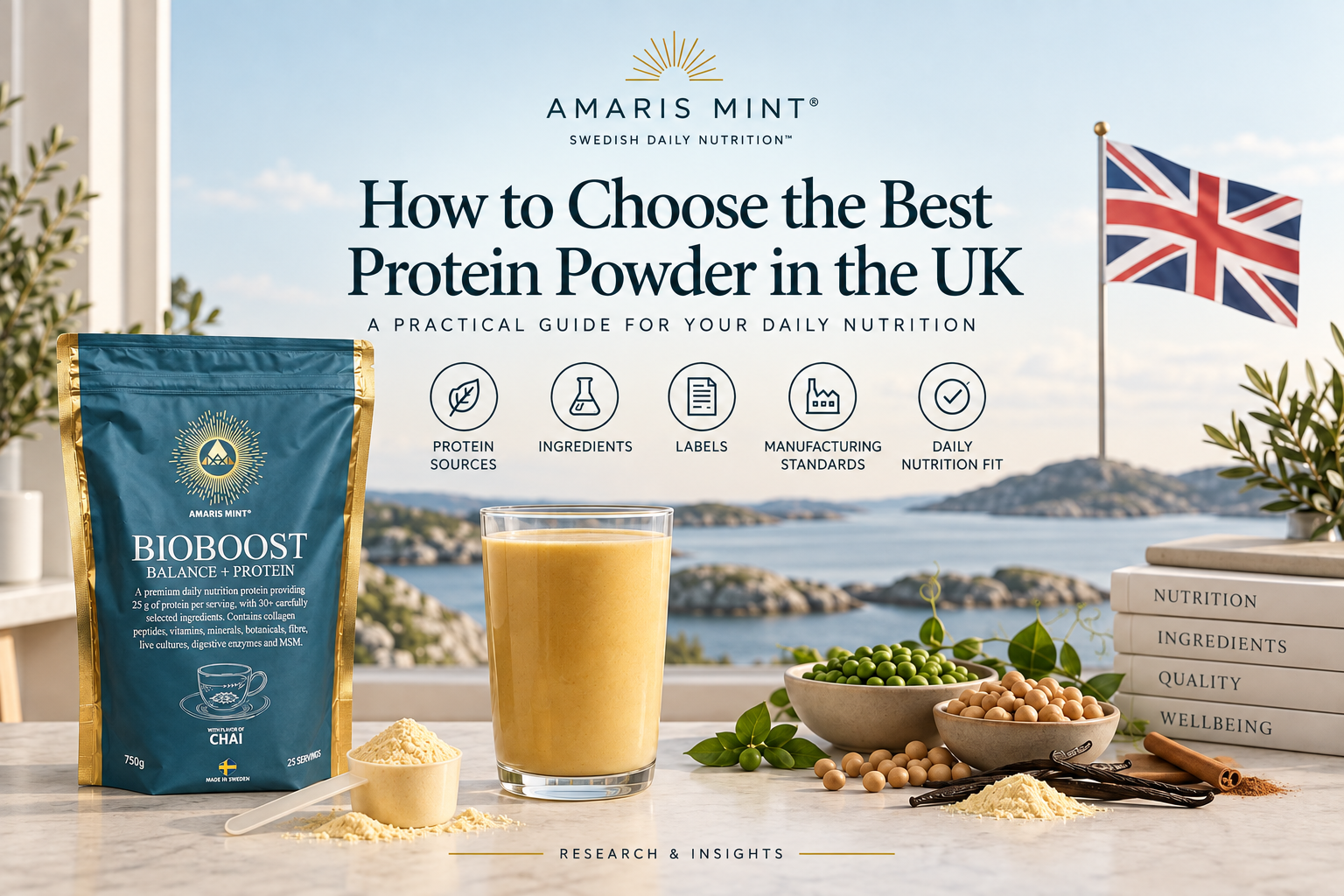
With so many protein powders available in the UK, choosing one can quickly become complicated.
Whey or plant protein? Protein alone or a broader daily nutrition formula? What does “clean protein powder” actually mean? And how much attention should you pay to ingredients, manufacturing standards and nutritional information?
Rather than looking for a single product described as the “best”, it is more useful to understand what makes a good protein powder for your individual needs and daily routine.
Here are the key things to consider.
1. Start with why you want protein powder
Protein powders are often associated with gyms and sports nutrition, but protein is an important part of everyday nutrition.
Protein contributes to the maintenance of muscle mass and normal bones.1
Your reason for using a protein powder might simply be to make it easier to include protein consistently within your daily diet.
Before choosing one, ask yourself:
- How will I actually use this product?
- Does it fit naturally into my breakfast or daily routine?
- Do I want a straightforward protein powder or a broader daily nutrition formula?
- Is the ingredient information transparent?
- Am I likely to use it consistently?
A product that fits easily into everyday life may be more useful to you than one purchased for a complicated routine that is difficult to maintain.
For more on daily protein patterns, read Should You Spread Protein Throughout the Day?
2. Look at the protein source
The source of protein is one of the first things worth checking. Common options include whey, casein and plant proteins such as pea, soy and rice.
Whey protein
Whey is a milk-derived protein containing all nine essential amino acids. Different forms include whey protein concentrate, whey protein isolate and whey protein hydrolysate.
The right choice depends on your dietary requirements, preferences and the overall formulation of the product. Our guide to Whey Concentrate vs Isolate explains the distinction in more detail.
Plant protein
Plant-based powders can be useful for people following vegan or dairy-free diets. Some products combine different plant proteins to provide a broader amino acid profile.
Neither category should automatically be considered “better”. The appropriate choice depends on the person using it.
3. Read beyond the front of the pack
When comparing protein powders in the UK, do not rely entirely on front-of-pack marketing. Look at the actual label.
Check:
- protein content
- serving size
- protein source
- full ingredient list
- allergens
- vitamins and minerals, where applicable
- directions for use
- relevant warnings
- manufacturer or responsible food business information
This gives you considerably more useful information than terms such as “premium”, “ultimate” or “advanced”. Food supplements have specific labelling requirements. When choosing a product, read the label carefully and follow the warnings, instructions and recommended dosage.4
For a practical walkthrough, see How to Read a Protein Powder Label.
4. Be careful with the word “clean”
Searches for clean protein powder and similar phrases are common, but “clean” does not tell you precisely what is inside a product.
Instead of relying on the word itself, look for transparency.
Can you identify the protein source? Can you see what else has been included? Are allergens clearly disclosed? Can you understand the nutritional information? Does the company explain where and how the product is manufactured?
Specific information is more useful than vague wellness terminology.
Our guide to Ingredient Transparency in Supplements explains what to check.
5. Consider the complete formulation
Not every protein powder is designed to do the same job. Some formulations focus almost entirely on protein. Others combine protein with additional nutritional ingredients.
Commercial disclosure: Amaris Mint® markets BioBoost Balance+ Protein™. Product-specific information below is based on the current formulation and should not be interpreted as evidence that ingredient research demonstrates a health outcome for the finished product.
BioBoost Balance+ Protein™ takes the second approach. It is positioned as a daily nutrition protein rather than purely as a conventional sports protein powder.
The formulation brings together whey protein concentrate, collagen peptides, vitamins, minerals and carefully selected additional ingredients in one daily blend.
This distinction matters. Someone looking purely for the highest possible protein concentration may prioritise differently from someone looking for a product designed to become part of a broader daily nutrition routine.
6. Look for formulation transparency
A long ingredient list is not automatically evidence of a better product. The important question is why the ingredients are there.
Look for brands that clearly explain their formulation rather than relying on impressive ingredient numbers or vague proprietary terminology.
BioBoost Balance+ Protein™ contains 30+ carefully selected ingredients, including whey protein, collagen peptides, vitamins, minerals, botanicals, fibre and other nutritional ingredients.
The number itself is supporting information. The main purpose is simpler: making daily protein and nutrition easier to incorporate into a consistent routine.
7. Check where and how it is manufactured
Manufacturing information can provide another useful point of comparison.
Look for clear information about country of manufacture, food-safety standards, quality-control processes, allergen information and traceability.
BioBoost Balance+ Protein™ is made in Sweden and manufactured in an FSSC 22000-certified facility.
FSSC 22000 is a food-safety management certification scheme recognised by the Global Food Safety Initiative.2
For a fuller explanation, read FSSC 22000 Explained: What It Means for Supplement Manufacturing.
8. Understand protein claims
Protein has authorised health claims in Great Britain. For qualifying foods, authorised wording includes that protein contributes to the maintenance of muscle mass and normal bones.1
That is different from broad promises about performance, recovery or other outcomes.
When comparing products, be cautious about marketing language that appears to promise much more than the nutritional evidence supports. Food information must not be misleading, and food claims must comply with the applicable rules.3
9. Decide whether you want sports nutrition or daily nutrition
This is an important distinction.
A traditional sports protein powder may be designed primarily around gym use, training or athletic positioning. A daily nutrition protein can serve a different consumer need.
BioBoost Balance+ Protein™ is positioned around everyday nutrition and routine consistency.
It can be incorporated into breakfast or another convenient point in the day as part of a varied, balanced diet and healthy lifestyle.
This is central to The Swedish Daily Nutrition™ Routine: making good daily nutrition easier to repeat.
10. Think about whether you will actually use it every day
The nutritional profile matters. So does behaviour.
Ask yourself whether the product is convenient enough to become part of your normal routine. Can you easily prepare it? Do you know when you will use it? Does it simplify something you already want to do?
A well-formulated product has limited practical value if it stays at the back of the cupboard. For this reason, routine is an important part of choosing a protein powder.
So, what should you look for in a good protein powder?
When searching for the best protein powder in the UK for your needs, look beyond rankings and marketing claims.
Consider the protein source, nutritional information, ingredients, manufacturing standards, transparency and how easily the product fits into your daily life.
For people looking for more than a conventional sports protein, BioBoost Balance+ Protein™ offers a different approach.
It combines daily protein with a broader nutrition formulation, is clinician-formulated and is manufactured in an FSSC 22000-certified facility in Sweden.
The aim is not to make nutrition more complicated. It is to make a consistent daily nutrition routine simpler.
Discover BioBoost Balance+ Protein™
BioBoost Balance+ Protein™ is part of The Swedish Daily Nutrition™ Routine by Amaris Mint®.
Explore the range and choose the flavour that best fits your daily routine.
Explore BioBoost Balance+ Protein™
References
- Department of Health and Social Care. Great Britain nutrition and health claims register. Great Britain Nutrition and Health Claims Register.
- Foundation FSSC. FSSC 22000 Scheme. FSSC 22000.
- UK Government. Food labelling and packaging: Nutrition, health claims and supplement labelling. UK food labelling and claims guidance.
- Food Standards Agency. Food supplements guidance. 2026. Food supplements guidance.