

Cart
0
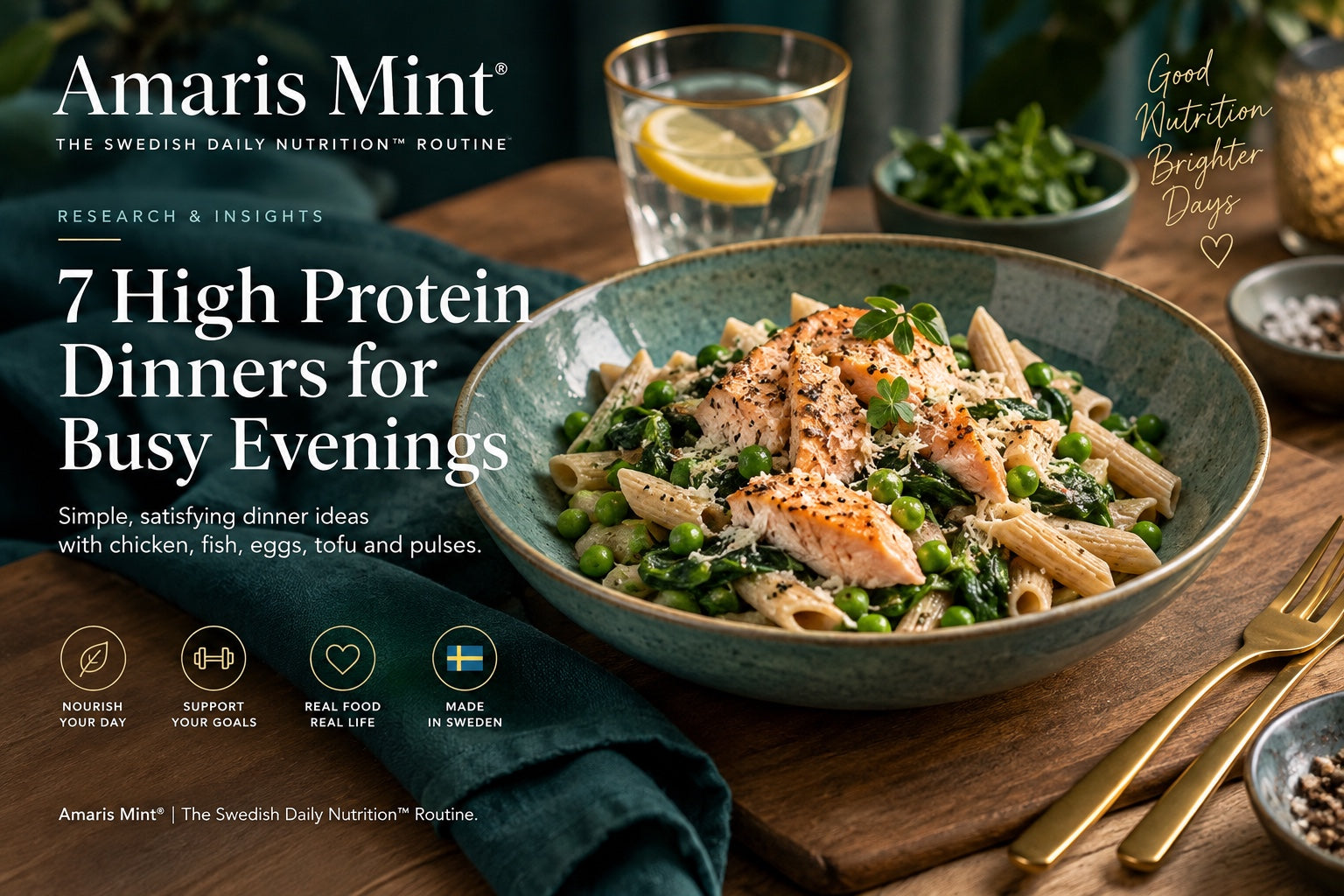
Dinner does not need to be complicated to include a useful amount of protein. Start with a familiar protein food, add vegetables and a starchy food, then use a seasoning you enjoy.
These seven ideas use chicken, salmon, turkey, eggs, tofu, tuna and lentils. Choose two that fit your week and keep one as a cupboard-friendly backup.
The NHS Eatwell Guide places beans, pulses, fish, eggs, meat and other protein foods within a varied overall diet. Balance can be considered across the day or week rather than forcing every meal to look the same.1
Choose your dinner
| Dinner | Approx. protein | Time |
|---|---|---|
| Lemon chicken, couscous and broccoli | 49 g | 25 min |
| Salmon and pea wholewheat pasta | 46 g | 25–30 min |
| Turkey and kidney-bean chilli | 40 g | 30 min |
| Spinach and cottage-cheese scramble on toast | 37 g | 15–20 min |
| Ginger tofu and edamame noodles | 48 g | 25 min + pressing if needed |
| Tomato, tuna and white-bean stew | 47 g | 20 min |
| Lentil and mushroom jacket potato | 36 g | 25 min, microwave |
About the estimates: Figures are calculated for one serving from the listed quantities and reference nutrition data. Actual values vary by brand, preparation and portion size. These are meal ideas, not individual protein targets.
For the wider daily picture, see our guide to women’s daily protein needs and guide to protein in everyday foods.
Before you cook: Each recipe serves one. Meat and fish weights are raw edible weights. Couscous, pasta and noodles are dry weights. Canned beans, lentils and tuna are drained weights. Follow ingredient pack instructions and check labels for allergens.
1. Lemon chicken, couscous and broccoli
For one: 150 g skinless chicken breast, 50 g wholewheat couscous, 150 g broccoli, 1 tsp olive oil, 1 tbsp lemon juice and black pepper.
Method: Cook the chicken thoroughly in the oil. Steam the broccoli and prepare the couscous according to its pack. Add lemon to the couscous and serve together.
Key allergen: wheat. Bottled lemon juice may contain sulphites.
2. Salmon and pea wholewheat pasta
For one: 140 g salmon, 50 g wholewheat pasta, 100 g frozen peas, 50 g spinach, 40 g plain yoghurt, 1 tbsp lemon juice and black pepper.
Method: Bake the salmon at 200°C, or 180°C fan, until cooked through. Cook pasta and peas. Wilt in the spinach, remove from the heat, stir through yoghurt, lemon and a little pasta water, then add the flaked salmon.
Key allergens: fish, milk and wheat.
3. Turkey and kidney-bean chilli
For one: 125 g turkey mince, 100 g kidney beans, 150 g chopped tomatoes, 50 g onion, 1 tsp olive oil, ½ tsp cumin, ½ tsp paprika, chilli flakes and 60 g wholemeal bread.
Method: Soften the onion in oil. Add the turkey and cook thoroughly. Stir in spices, tomatoes and beans and simmer until thickened. Serve with bread.
Key allergen: wheat. Check bread for additional allergens such as soya.
4. Spinach and cottage-cheese scramble on toast
For one: 2 medium eggs, 150 g cottage cheese, 100 g tomatoes, 75 g spinach, 60 g wholemeal bread, 1 tsp olive oil and black pepper.
Method: Soften the tomatoes and spinach in the oil. Add beaten eggs and stir until set. Fold through the cottage cheese, heat through and serve on toast.
Key allergens: egg, milk and wheat.
5. Ginger tofu and edamame noodles
For one: 200 g firm tofu, 80 g cooked shelled edamame, 50 g dry egg-free wholewheat noodles, 150 g broccoli, 10 g fresh ginger, 2 tsp reduced-salt soy sauce and 1 tsp rapeseed oil.
Method: Prepare the edamame, broccoli and noodles according to their packs. Cook the tofu in the oil according to its pack directions. Add ginger, vegetables, noodles and soy sauce and toss until hot.
Key allergens: soya and wheat.
6. Tomato, tuna and white-bean stew
For one: 120 g drained tuna in spring water, 100 g cannellini beans, 150 g chopped tomatoes, 50 g onion, 75 g spinach, 1 small garlic clove, 1 tsp olive oil and 60 g wholemeal bread.
Method: Soften onion in oil and add garlic. Add tomatoes and beans and simmer until tender. Stir in tuna and spinach until steaming hot. Serve with bread or toast.
Key allergens: fish and wheat.
7. Lentil and mushroom jacket potato
For one: 1 baking potato about 200 g raw, 150 g cooked drained green lentils, 100 g chestnut mushrooms, 200 g plain cottage cheese, 1 tsp olive oil, thyme and black pepper.
Method: Scrub and prick the potato and microwave according to your appliance guidance until tender. Cook the mushrooms in the oil, add lentils and thyme and heat through. Split the potato, add the lentil mixture and finish with cottage cheese.
Key allergen: milk.
Plan two dinners, not seven different nights
Choose meals that share ingredients. The chilli and tuna stew both use onions, tomatoes and beans. Spinach works in the pasta, scramble and stew. Cottage cheese appears in the scramble and jacket potato.
For meals designed to travel, see our make-ahead protein lunches for work.
Cook and store your food safely
Keep raw meat and fish separate from ready-to-eat foods. Cook chicken and turkey thoroughly. A clean food thermometer can check that the centre reaches 70°C for two minutes, or an equivalent combination such as 75°C for 30 seconds.2
Cool leftovers promptly and refrigerate within one to two hours. Keep the fridge between 0°C and 5°C and use refrigerated leftovers within 48 hours unless an ingredient requires a shorter period. Reheat only once, until steaming hot throughout.3
Where does a protein powder fit?
These dinners start with everyday foods. A protein powder is an optional addition to your wider routine, not a required ingredient in these recipes.
Our protein powder versus food guide explores that decision. For BioBoost Balance+ Protein™ preparation directions, ingredients, allergens and suitability, visit the BioBoost Vanilla product page.
Commercial disclosure: Amaris Mint® sells BioBoost Balance+ Protein™.
The next step: Pick two dinners, add their ingredients to your shopping list and choose one backup for a busy evening.
Amaris Mint® | The Swedish Daily Nutrition™ Routine.
References
- NHS. The Eatwell Guide.
- Food Standards Agency. Cooking your food.
- Food Standards Agency. How to chill, freeze and defrost food safely.
- GOV.UK. Nutrition and health claims guidance.
- UK legislation. Regulation (EC) No 1924/2006, Annex: High Protein.
- European Commission. Nutrition claims.
- Public Health England. Composition of Foods Integrated Dataset (CoFID), 2021.
Nutrition calculation notes
Protein and energy estimates are calculations, not laboratory analyses. They use the listed edible quantities with UK food-composition data and current manufacturer or retailer nutrition information where a specific packaged food is relevant. Protein energy is calculated at 4 kcal per gram of protein.
For the reference versions, protein provides approximately 24% to 43% of total meal energy. The revised lentil and mushroom jacket potato provides about 36 g protein and approximately 24.5% of its energy from protein. Each reference meal therefore clears the 20% condition for the “high protein” nutrition claim. Brand substitutions, portion changes and extra toppings can change the result.4, 5, 6
Primary nutrition-data reference: CoFID 20217. Packaged-food values should always be checked against the current label before reproducing a calculation.