

Cart
0
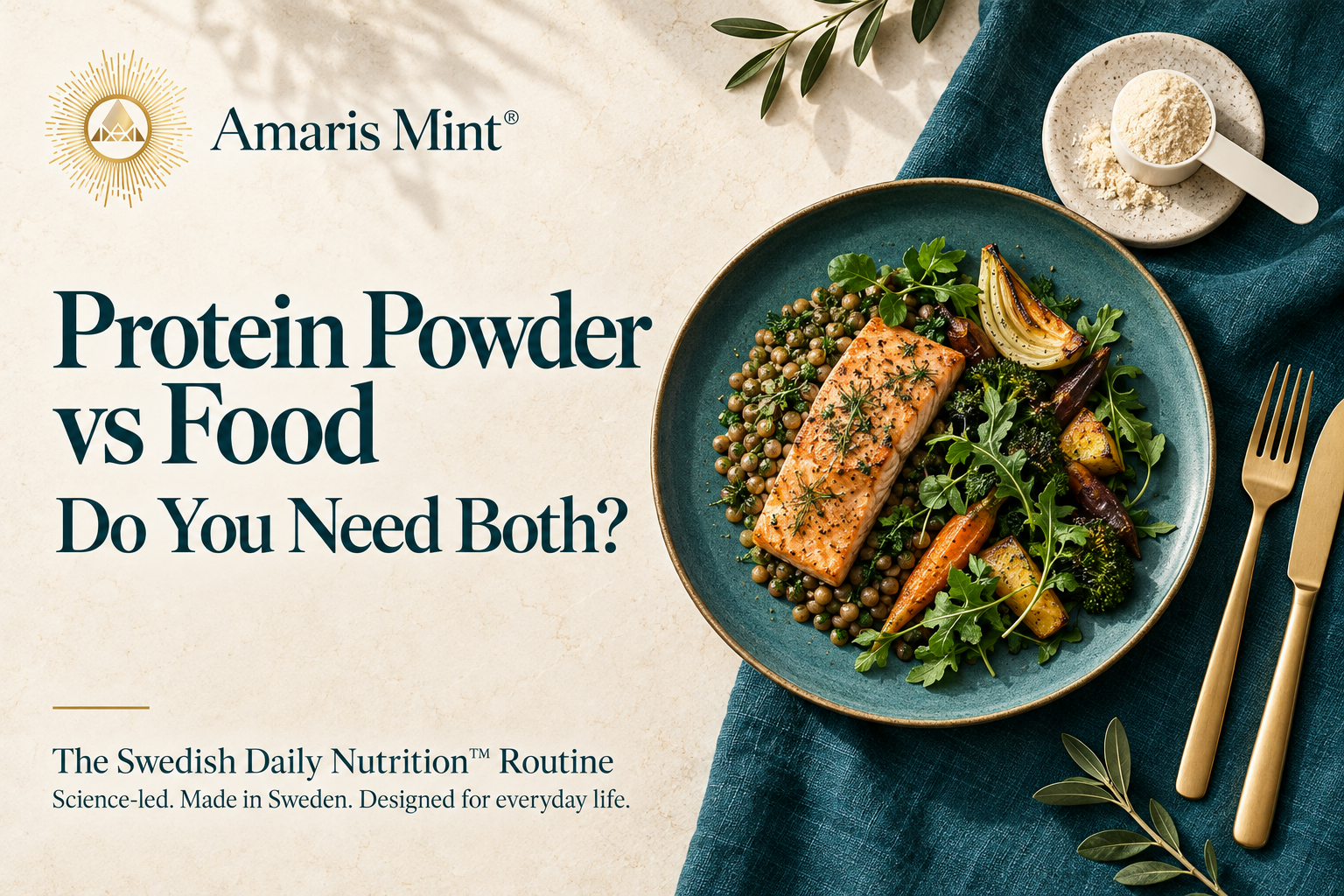
You can meet your protein needs through food. Protein powder can offer a convenient addition when it suits your diet and routine. You do not automatically need both. 1, 3
The useful comparison is what each option contributes to your day. A scoop, a pot of yoghurt and a serving of lentils bring different things to the table.
Commercial disclosure: Amaris Mint® sells BioBoost Balance+ Protein™, discussed below.
What everyday protein foods offer
Protein provides amino acids that the body uses to make its own proteins. It is found in many foods, including eggs, dairy, fish, meat, beans, lentils and tofu. 1
These foods also contribute other nutrients. Dairy provides calcium as well as protein. Pulses offer fibre, while nuts provide unsaturated fats and fibre alongside their protein. Choosing a variety of sources helps bring different nutrients into your diet. 1
The NHS Eatwell Guide places protein foods within a wider eating pattern that includes fruit, vegetables, starchy foods and dairy or suitable alternatives. That balance matters across the day or week. 2
What a protein powder offers
A powder can make it easier to prepare a familiar drink or add protein to a smoothie, following its instructions. Its practical appeal may be a quick preparation step, a flavour you enjoy or a format that fits around work and travel.
Its nutritional contribution depends on the product. Some formulas focus on protein; others include additional ingredients. Read the full label before deciding what a serving adds to your usual meals.
A supplement should complement your diet. Added vitamins and minerals do not, on their own, make a protein powder a complete meal replacement. The Food Standards Agency describes food supplements as additions to the normal diet. 3 Our guide to protein shakes and meal replacements explains the distinction.
Compare portions you might actually use
For a wider food comparison, see our high protein foods chart, with quantities for twelve everyday choices.
| Example portion | Estimated or declared protein | What the portion represents |
|---|---|---|
| 150 g Arla Skyr Natural5 | 15.0 g | A chilled dairy food, before fruit or other additions. |
| 150 g boiled green or brown lentils6 | 11.7 g | Cooked edible weight, before sauce or other meal components. |
| Myprotein Impact Whey, Vanilla; 30 g powder with water7 | 22 g | The declared powder serving; milk or other additions need counting separately. |
This is a dated reading of manufacturer information, not a taste test, clinical comparison or ranking of the best products. Flavours and formulas vary. Amaris Mint sells a competing product; no BioBoost nutrition figures are used in this example.
Skyr uses the manufacturer’s 10 g protein per 100 g; the lentil estimate uses CoFID 2021 entry 13-661 at 7.8 g per 100 g. Multiply each by 1.5 for the food portions shown. These are examples, not recommended portions for everyone.
For cost, divide the price paid by the amount you can actually use. Compare ready-to-eat skyr with its portion from the pot. For lentils, distinguish dry purchase weight from cooked yield and account for leftovers. For the powder, include its mixing ingredients. Our bar and shake comparison shows dated packaged-product calculations.
The food choices have different roles: lentils can form part of a savoury meal, while skyr may fit breakfast or a snack. The powder offers another preparation format. None of these protein totals establishes the balance of the complete meal, and you do not automatically need to add the powder to a diet that already meets your needs.
Three ways to make the decision
If your meals already work well: keep the protein foods you enjoy. The British Nutrition Foundation reports that average UK protein intakes already exceed reference needs, although individual requirements vary. A powder is not automatically necessary. 1
If convenience is the problem: compare simple food options with a powder. A pot of yoghurt, an egg prepared in advance or beans added to lunch may suit one day. A prepared shake alongside food may suit another. Choose the option you can comfortably repeat.
If meals are becoming irregular: review the meal itself. Could you prepare lunch ahead, keep useful ingredients available or make breakfast easier? A protein product should not become a reason to overlook the wider balance of your diet. 2
For food-based inspiration, explore our seven protein-rich breakfast ideas.
Keep breakfast, add the preparation you prefer
A bowl of oats and berries can remain breakfast. If a shake suits your needs and appetite, prepare one BioBoost serving according to the pack and enjoy it alongside the bowl. Choose a BioBoost preparation without assuming that the food and powder are nutritionally interchangeable.
Its 30+ carefully selected ingredients include whey protein, collagen, vitamins, minerals, botanicals, cultures, fibres and enzymes. It is clinician-formulated and made in Sweden in an FSSC 22000-certified facility. 4
Follow the pack’s preparation instructions and recommended daily amount. It contains milk and bovine collagen. The product is for people aged 16 and over and is not recommended during pregnancy or breastfeeding. Check the complete ingredient and allergen information before use. 4
If you have a medical condition or take prescribed medicines, discuss supplement use with a healthcare professional. 3
Explore BioBoost Balance+ Protein™ and its full product information.
Food supplements should complement a varied, balanced diet and healthy lifestyle and should not be used as a substitute for either.
References
- British Nutrition Foundation: Protein. Accessed 11 September 2026.
- NHS: The Eatwell Guide. Accessed 11 September 2026.
- Food Standards Agency: Food supplements guidance. Accessed 11 September 2026.
- Amaris Mint®: BioBoost Balance+ Protein Vanilla. Accessed 11 September 2026.
Sources for the worked comparison
5) Arla UK. Skyr Natural. Checked 12 September 2026.
6) CoFID 2021, Proximates, food code 13-661. Checked 12 September 2026.
7) Myprotein. Impact Whey: Vanilla declaration. Checked 12 September 2026.