

Cart
0
Research & Insights
Inflammation and Everyday Nutrition: What We Know
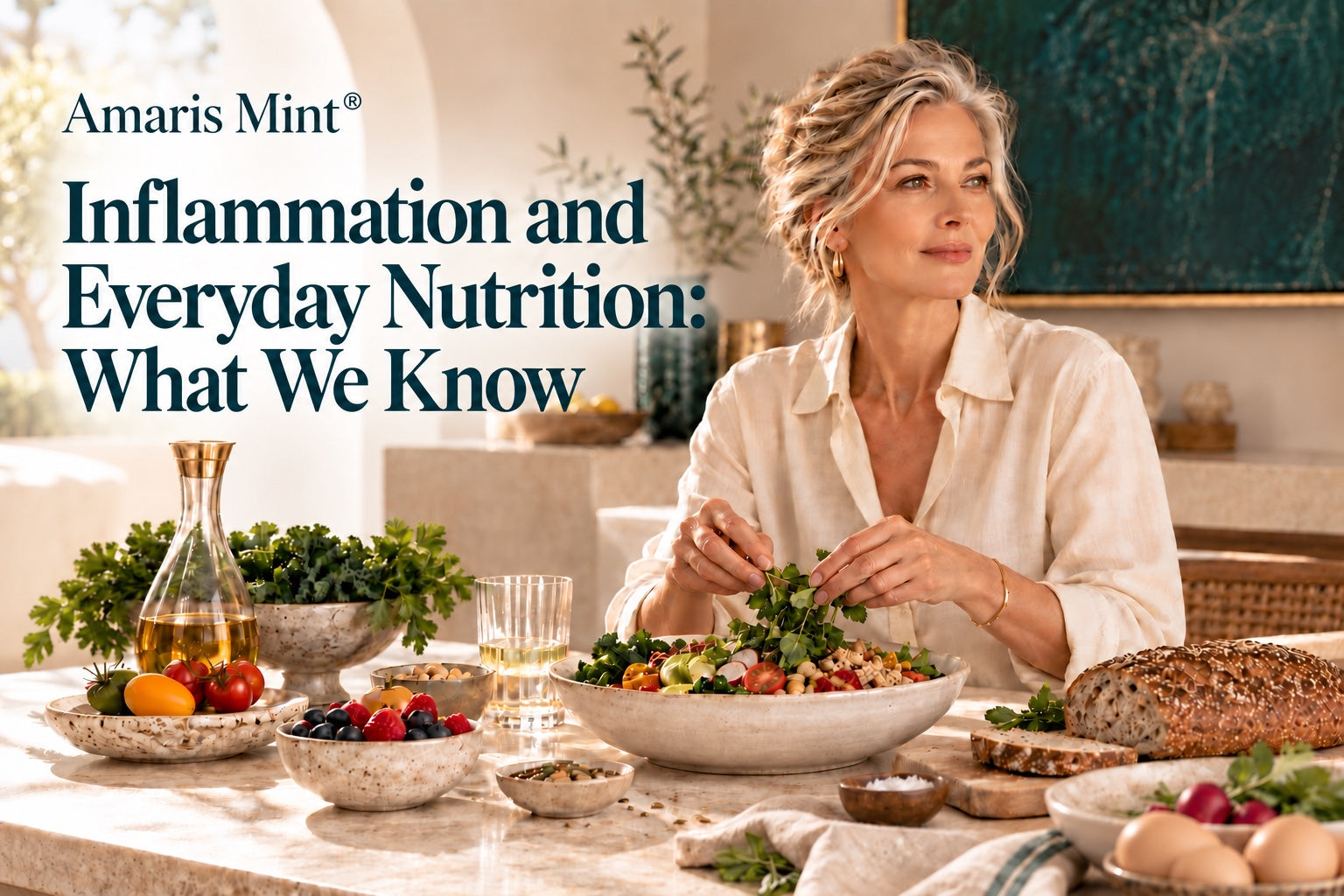
Inflammation is a normal biological response that helps the body respond to injury, infection or irritation. It is not automatically harmful, and it is not something that can be judged from one food, one symptom or one day of eating.¹
For women over 50, conversations about inflammation often appear alongside discussions of menopause, ageing, exercise, weight and supplements. The more useful question is how everyday nutrition can support a balanced lifestyle without promising to treat a medical condition.
What is inflammation?
Inflammation is part of the body's defence and repair response. It can be short-term, such as after an injury, or longer-lasting when the body continues to receive signals associated with irritation, illness or another underlying condition.
The word “inflammation” is used broadly. Persistent symptoms such as unexplained pain, swelling, stiffness, fever, fatigue or changes in health should be discussed with a qualified healthcare professional. Nutrition is not a substitute for diagnosis or treatment.
Can food cause inflammation?
There is no single food that explains every person's experience. A varied diet can include vegetables, fruit, beans, pulses, wholegrains, nuts, seeds and suitable protein foods. A balanced diet is built over time, not judged by perfection.
The NHS Eatwell Guide recommends including a variety of foods across the day and week, including fruit and vegetables, starchy carbohydrates, protein foods and dairy or suitable alternatives.²
What does “anti-inflammatory diet” mean?
“Anti-inflammatory diet” is a popular search phrase, but it can imply more certainty than the evidence allows. Sensible foundations include vegetables and fruit, beans and lentils, wholegrains, fish, eggs, yoghurt, tofu, nuts, seeds, olive oil and other unsaturated fats, with fewer sugary drinks and highly processed foods.
These are foundations for a balanced diet. They should not be presented as a treatment for inflammation or a replacement for medical care.
Where does protein fit?
Protein is one part of everyday nutrition. Protein contributes to the maintenance of normal muscle mass and normal bones.
Protein foods include eggs, fish and seafood, chicken and lean meat, yoghurt, skyr, cottage cheese, milk, tofu, tempeh, beans, lentils, chickpeas, nuts and seeds.
Read Protein After 50: A Simple Daily Guide for Women for practical routine planning.
What about fibre?
Fibre is found in vegetables, fruit, beans and pulses, oats, wholegrain bread, rice and pasta, nuts and seeds. Increase fibre gradually, drink enough fluid and choose a pace that suits you. There is no need to rely on one “superfood”.
A simple day of everyday nutrition
Breakfast
- Skyr with oats, berries and seeds
- Eggs with wholegrain toast
- Porridge made with milk and fruit
- Cottage cheese with fruit and oatcakes
- Tofu with toast and vegetables
See protein-rich breakfast ideas for women over 50.
Lunch
- Lentil soup with wholegrain bread
- Bean salad with potatoes
- Tuna, egg or chicken salad
- Tofu with rice and vegetables
- Baked potato with cottage cheese and salad
Dinner
- Salmon with potatoes and vegetables
- Chicken with rice and roasted vegetables
- Bean chilli with brown rice
- Tofu stir-fry with noodles
- Lentil bolognese with wholegrain pasta
Does menopause change the approach?
Menopause is not one single nutritional event, and there is no universal “menopause diet”. Review regular meals, protein at main meals, vegetables, fruit, pulses or wholegrains, fluid intake, movement and any symptoms that need professional advice.
Read Protein and Menopause: Needs, Food and Supplements.
Are supplements needed?
Not automatically. A food supplement may be useful for a specific nutritional need or practical convenience, but it should not be described as treating inflammation or correcting a medical condition without appropriate professional advice.
Before choosing a supplement, check the full ingredient list, allergens, serving instructions, dietary suitability, medication and health precautions, and whether the product is necessary for your circumstances.
For manufacturing and quality information, see our Quality & Standards page.
If you are pregnant, breastfeeding, taking medication, managing a medical condition or under clinical supervision, seek appropriate advice before using a supplement. See UK guidance on nutrition and health claims.³
What should you avoid?
Be cautious with content that promises to “flush out” inflammation, “switch off” inflammation, “repair” cells, “target inflammation pathways”, replace medical treatment or guarantee a result from one ingredient.
A better approach is to focus on what can be done consistently: eat a varied diet, include protein and fibre-rich foods, move regularly, sleep well where possible and seek professional support for persistent symptoms.
The practical takeaway
Inflammation is a complex biological process, not a single dietary problem. A balanced pattern of eating can include vegetables, fruit, pulses, wholegrains, suitable protein foods, dairy or alternatives, nuts and seeds. No single food or supplement should be presented as a treatment.
For women over 50, the most useful starting point is simple: build a varied daily routine that is nourishing, realistic and easy to repeat.
References
- Cleveland Clinic: What Is Inflammation?
- NHS: Eating a balanced diet
- GOV.UK: Nutrition and health claims for food and supplements
This article is for general education only and does not replace individual medical or dietary advice.