

Cart
0
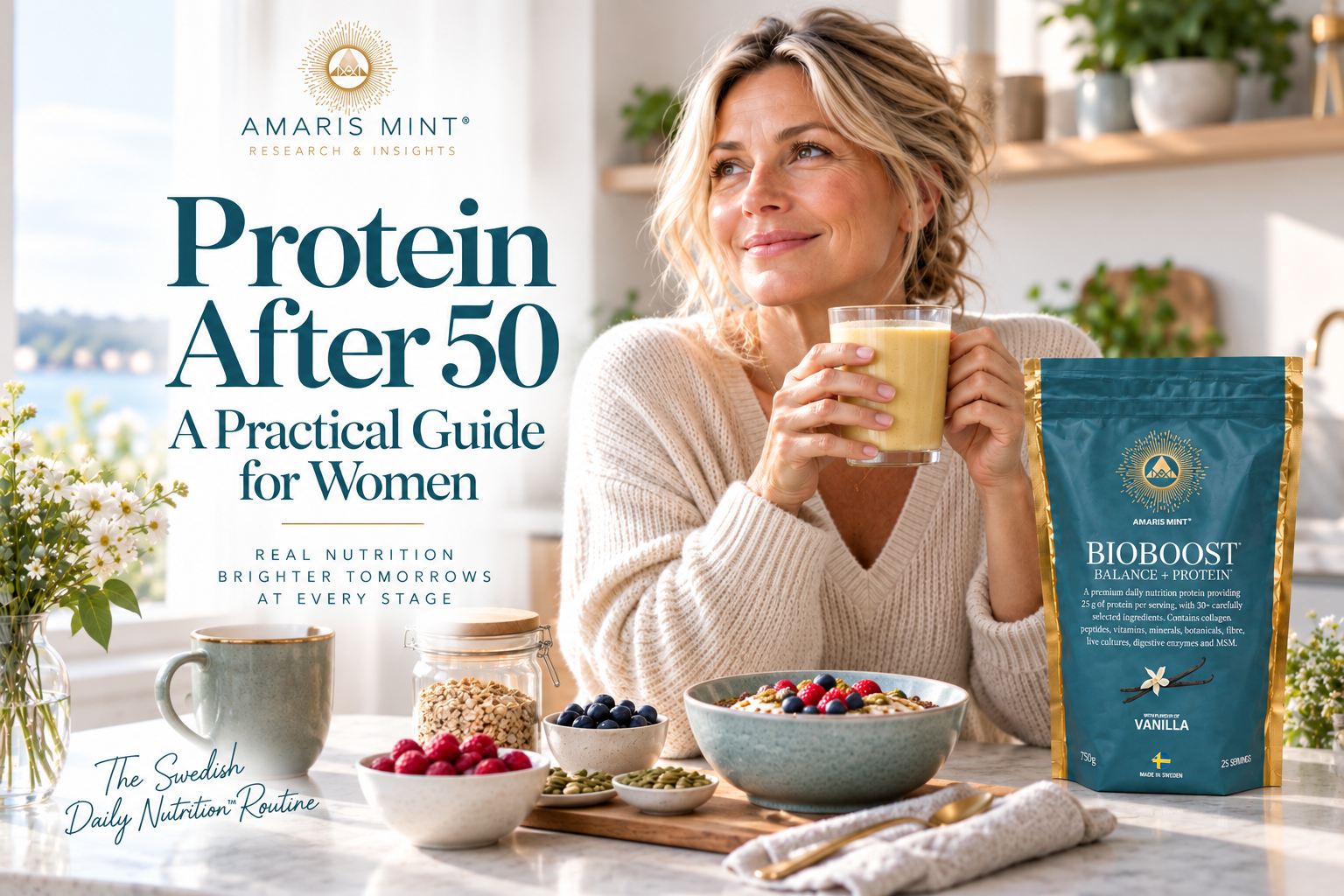
Protein remains important throughout adult life. After 50, questions about protein often become more prominent. Should you eat more? Does menopause change your requirements? Should protein be spread across the day? Is a protein powder necessary?
Protein contributes to the maintenance of muscle mass and normal bones.1 The amount appropriate for an individual depends on body weight, usual diet, activity, health and clinical circumstances.
Commercial disclosure: Amaris Mint® markets BioBoost Balance+ Protein™, which is discussed later in this article.
How much protein do women over 50 need?
There is no official EFSA protein requirement that suddenly begins on your 50th birthday. The European Food Safety Authority sets a Population Reference Intake of 0.83 g of protein per kilogram of body weight per day for healthy adults, including older adults.1
| Body weight | EFSA population reference |
|---|---|
| 50 kg | about 42 g/day |
| 60 kg | about 50 g/day |
| 70 kg | about 58 g/day |
| 80 kg | about 66 g/day |
| 90 kg | about 75 g/day |
These are population reference values, not personalised targets. For a fuller explanation, read our guide to how much protein women need per day.
Why does protein become a bigger conversation with age?
Ageing is associated with changes in body composition, including skeletal muscle. Protein supplies amino acids used throughout the body and contributes to the maintenance of muscle mass.1
Protein should not be viewed in isolation. Regular physical activity matters too. Adding protein powder should not be presented as a substitute for movement, resistance exercise, adequate overall nutrition or appropriate medical care.
Does research support eating more protein after 50?
Official population reference values and intervention studies answer different questions. EFSA's reference value describes an intake intended to meet population needs. Research studies may investigate whether different protein intakes or supplements influence particular outcomes in selected groups.
A 2024 systematic review and meta analysis examined 38 articles investigating protein supplementation and muscle mass in adults aged 65 and over. It reported a positive effect on muscle mass among community dwelling older adults, but found no significant differences according to supplementation dose, frequency or timing categories examined.2
The evidence is not uniformly positive. An overview of systematic reviews and meta analyses found that protein supplementation did not consistently improve muscle mass, strength or physical performance across older people generally or healthy older populations. It reported more supportive evidence in some groups with long term conditions, particularly when supplementation was combined with exercise.3
The practical conclusion is not that every woman over 50 needs a protein supplement. Age, health status, exercise, usual dietary intake and the population being studied all matter.
Start by looking at what you already eat
Before calculating supplements, look at an ordinary day. Identify where protein comes from at breakfast, lunch, dinner and snacks. Everyday sources include eggs, yoghurt, fish, poultry, meat, beans, lentils, chickpeas, tofu, tempeh, soya foods, nuts and seeds.
Our practical guide to high protein foods compares familiar foods using realistic serving sizes.
Breakfast is worth checking
Breakfast can vary considerably. Two eggs provide protein. So does yoghurt. Oats contribute some protein. A breakfast made primarily from toast, jam, fruit or coffee may contain less. This simply gives useful information about where protein appears during the day.
For practical examples, see our protein-rich breakfast ideas for women over 50.
Should you spread protein across the day?
The evidence does not justify turning every meal into a rigid protein calculation. A practical approach is to look at breakfast, lunch and dinner and ask: Where is the protein source in this meal?
Our guide to when to take protein powder explores timing research in more detail.
Protein and menopause
Turning 50 and entering menopause are not the same nutritional event. Women reach menopause at different ages and with different health, activity and dietary circumstances. It is misleading to give every woman in menopause a single personalised protein target based solely on menopause status.
Our separate guide to protein and menopause looks specifically at this stage of life.
For a wider look at balanced nutrition and inflammation, read Inflammation and Everyday Nutrition: What We Know.
Food first: practical protein sources after 50
You do not need specialist foods marketed specifically for people over 50 to obtain protein. The wider diet still matters. Protein does not replace vegetables, fruit, wholegrain or other starchy foods, essential fats and the range of micronutrients supplied by a varied diet.
What about resistance exercise?
Nutrition is only part of maintaining muscle. Evidence across reviews is mixed, but some populations appear more likely to benefit when protein supplementation accompanies exercise rather than supplementation being considered alone.3
Do women over 50 need protein powder?
Not automatically. A protein powder can be useful when it solves a genuine practical problem, such as a rushed breakfast or need for portability. If normal meals already provide sufficient protein and work well, there is no automatic requirement to add a powder simply because you have turned 50.
Our protein powder versus food guide explains this distinction.
How to assess a protein powder
Check protein per serving, protein source, the full ingredient list, allergens, dietary suitability, serving directions and documented manufacturing information. Read our guide to what a complete protein means, our protein powder label checklist and our ingredient transparency guide.
Where BioBoost Balance+ Protein™ fits
BioBoost Balance+ Protein™ is Amaris Mint's daily nutrition protein. It is designed to make daily protein and nutrition simpler alongside a varied, balanced diet. Protein is the nutritional anchor.
The formulation combines whey protein concentrate with hydrolysed bovine collagen peptides and a broader blend of 30+ carefully selected ingredients, including vitamins, minerals, botanicals, fibres, cultures and digestive enzymes. It is clinician formulated and manufactured in Sweden in an FSSC 22000 certified facility.
BioBoost should not be positioned as something every woman over 50 requires. Its role is practical. For suitable adults who choose to use it, it provides a repeatable daily nutrition option that can fit alongside everyday food.
Explore the BioBoost Balance+ Protein™ range and check current product information, ingredients, allergens and preparation directions before use.
BioBoost contains milk and bovine collagen and is not suitable for people with a milk allergy, vegetarians or vegans. It is intended for people aged 16 and over and is not recommended during pregnancy or breastfeeding. Check the current pack and product information for full ingredients, allergens, directions and precautions. If you take medicines, have a medical condition or are under medical supervision, seek advice from an appropriately qualified healthcare professional before use.
Food supplements should complement a varied, balanced diet and healthy lifestyle and should not be used as a substitute for either.
A simple routine after 50
- Look at yesterday's meals.
- Identify the main protein source in breakfast, lunch and dinner.
- Compare your overall intake with established population reference values.
- Consider your activity, appetite, health and individual circumstances.
- Improve the meal that needs the most help.
- Use a protein powder only if it makes that routine genuinely easier.
This fits The Swedish Daily Nutrition™ Routine. Start with food. Use practical nutrition where it helps. Keep the routine simple enough to repeat.
The practical takeaway
There is no nutritional switch that suddenly turns on at 50. Protein remains an important part of a varied diet, and maintaining muscle becomes increasingly relevant as we age. Official reference values and supplementation trials should not be blurred into one universal high protein prescription.
Daily nutrition works best when it is understandable, appropriate and repeatable.
Amaris Mint® | The Swedish Daily Nutrition™ Routine.
References
- European Food Safety Authority. Scientific Opinion on Dietary Reference Values for Protein. EFSA Journal. 2012;10(2):2557.
- Hettiarachchi J, Reijnierse EM, Kew N, et al. The effect of dose, frequency, and timing of protein supplementation on muscle mass in older adults: A systematic review and meta analysis. Ageing Research Reviews. 2024;99:102325.
- Obasi AA, Gordon AL, Smith K, et al. Effects of supplemental protein in older people: an overview of meta-analyses. Age and Ageing. 2025;54(12):afaf351.