

Cart
0
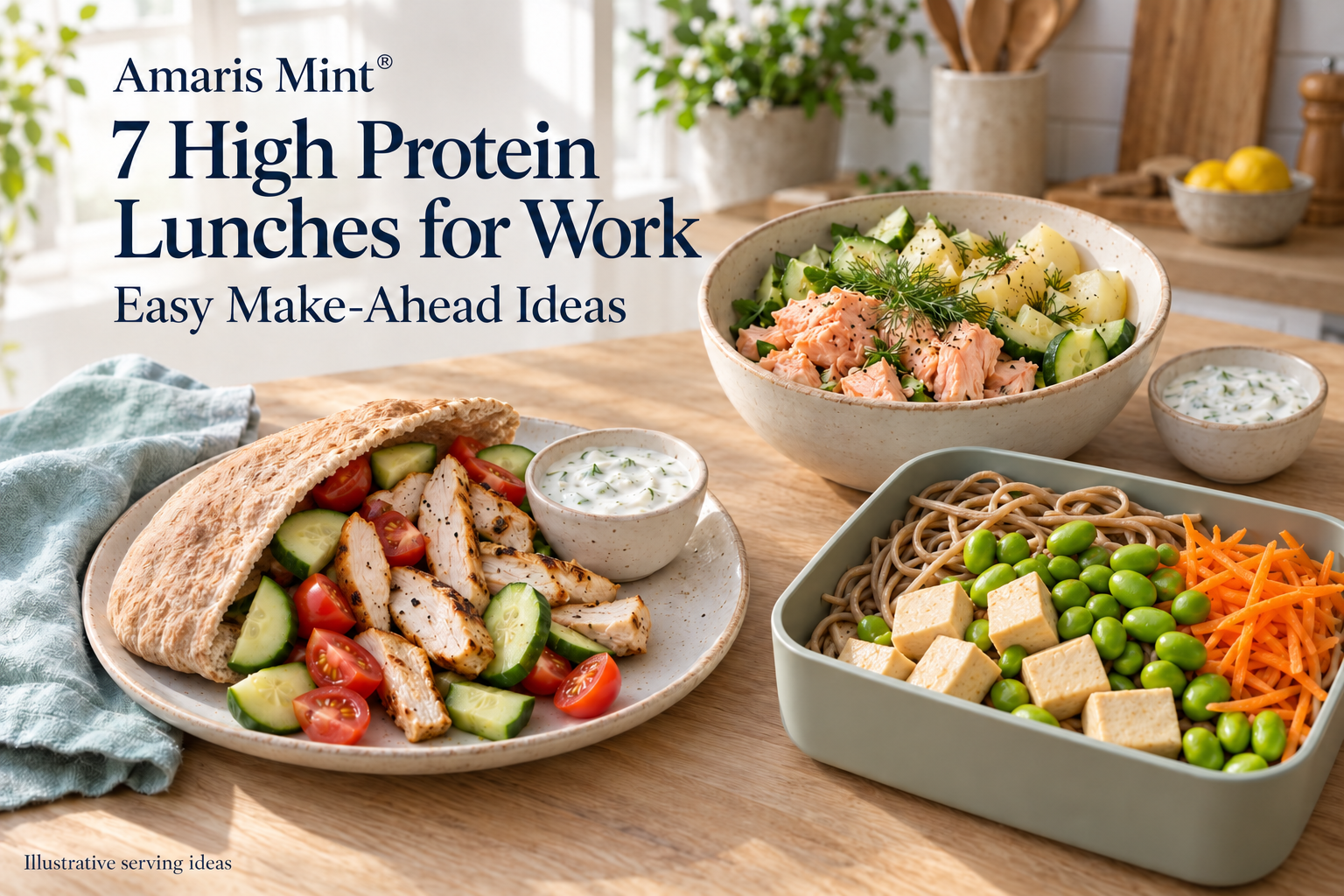
A work lunch has to do more than look good in a container. It needs to travel well, fit the facilities you actually have, and still be something you want to eat when lunchtime arrives.
These seven ideas use familiar foods, repeat ingredients across the week and keep the preparation practical. Each recipe serves one and includes an approximate protein figure for the complete lunch.
For context on overall daily intake, start with our guide to women’s daily protein needs. For individual foods, see our protein-per-serving guide.
Choose your lunch
| Lunch | Approx. protein | Best format |
|---|---|---|
| Chicken, chickpea and couscous box | 47 g | Cold or reheated |
| Salmon, potato and green-bean salad | 37 g | Cold |
| Egg and cottage-cheese rye box | 32 g | Cold |
| Turkey, hummus and salad wrap | 37 g | Cold |
| Tofu, edamame and rice bowl | 36 g | Cold or reheated |
| Tuna, white-bean and tomato pot | 42 g | Cold |
| Lentil, quinoa and feta pot | 28 g | Cold or reheated |
About the nutrition estimates: Protein figures are calculated for one serving using the ingredients and quantities listed and the reference products identified in the calculation notes. Actual values vary with the products used, preparation and portion size. These examples are meal ideas, not individual protein targets.
Before you prep: Cooked meat and fish weights are cooked edible weights. Couscous, rice and quinoa are cooked weights unless stated otherwise. Canned beans and tuna are drained weights. A measuring teaspoon is 5 ml and a tablespoon is 15 ml. Follow ingredient pack instructions and check labels for allergens.
1. Chicken, chickpea and couscous box
For one: 100 g cooked skinless chicken breast, 100 g cooked wholewheat couscous, 60 g canned chickpeas, drained and rinsed, 80 g cherry tomatoes, 50 g cucumber, 30 g rocket, 1 teaspoon (5 ml) olive oil and 1 tablespoon (15 ml) lemon juice.
How to make it: Put the cooled couscous in the base of a container. Add the chicken, chickpeas, tomatoes, cucumber and rocket. Mix the oil and lemon separately and add just before eating.
Make it easier: Cook extra chicken and couscous at dinner, cool them promptly, then portion the lunch once cold.
Key allergen: wheat. Bottled lemon juice may also contain sulphites. Check every ingredient label.
2. Salmon, potato and green-bean salad
For one: 120 g cooked salmon, 180 g cooked new potatoes, 100 g cooked green beans, 50 g plain 0% Greek-style yoghurt, 1 teaspoon (5 ml) Dijon mustard, 1 tablespoon (15 ml) lemon juice and black pepper.
How to make it: Cool the cooked salmon, potatoes and beans before packing. Mix the yoghurt, mustard, lemon and pepper into a dressing. Keep the dressing separate until lunch if you prefer the salad firmer.
Make it easier: Cook the potatoes and beans together while the salmon cooks.
Key allergens: fish, milk and mustard. Bottled lemon juice may also contain sulphites. Check every ingredient label.
3. Egg and cottage-cheese rye box
For one: 2 medium hard-boiled eggs, 120 g plain cottage cheese, 2 slices (70 g) rye bread, 100 g cherry tomatoes, 100 g cucumber and black pepper.
How to make it: Peel and halve the eggs. Pack them with the cottage cheese, tomatoes and cucumber. Keep the rye bread separate so it stays dry.
Make it easier: Boil several eggs at once, cool them promptly and keep them refrigerated.
Key allergens: egg, milk and wheat. The reference rye bread also contains soya. Check every ingredient label.
4. Turkey, hummus and salad wrap
For one: 100 g cooked turkey breast, 1 wholemeal tortilla wrap (about 60 g), 50 g plain hummus, 50 g mixed leaves, 50 g red pepper and 50 g cucumber.
How to make it: Spread the hummus over the wrap. Add the turkey and vegetables, keeping wet ingredients away from the edges. Roll tightly and wrap or box securely.
Make it easier: Keep the chopped vegetables dry before assembling to reduce sogginess.
Key allergens: wheat and sesame. The reference wrap also contains gluten-containing grains. Check every ingredient label.
5. Tofu, edamame and rice bowl
For one: 180 g drained firm tofu, 100 g cooked and drained shelled edamame prepared from frozen, 150 g cooked brown rice, 100 g raw broccoli florets, 50 g grated carrot, 2 teaspoons (10 ml) reduced-salt soy sauce, 1 teaspoon (5 ml) rapeseed oil and 5 g grated fresh ginger.
How to make it: Prepare the edamame according to the packet, then weigh out 100 g of cooked, drained beans without pods. Steam the broccoli and allow it to cool. Press the tofu first if its pack recommends this, then pat it dry and cut it into cubes. Cook the tofu according to its pack directions. Add the ginger briefly, then the soy sauce. Cool the cooked ingredients promptly before packing with the rice and carrot.
Make it easier: Use leftover brown rice only if it has been cooled and stored safely; otherwise cook and cool a fresh batch for lunch prep.
Key allergens: soya and wheat. Check every ingredient label, including precautionary allergen statements.
6. Tuna, white-bean and tomato pot
For one: 100 g canned tuna in spring water, drained, 100 g canned cannellini beans, drained and rinsed, 100 g cherry tomatoes, 50 g cucumber, 30 g red onion, 30 g rocket, 1 teaspoon (5 ml) olive oil, 1 tablespoon (15 ml) lemon juice and 60 g wholemeal bread.
How to make it: Mix the tuna, beans, tomatoes, cucumber, onion and rocket. Add the oil and lemon just before eating if you prefer. Keep the bread separate.
Make it easier: Keep canned tuna and beans in the cupboard so this can become the backup lunch when there are no leftovers.
Key allergens: fish and wheat. The reference wholemeal bread also contains soya. Bottled lemon juice may contain sulphites. Check every ingredient label.
7. Lentil, quinoa and feta pot
For one: 150 g cooked green lentils, 150 g cooked quinoa, 60 g feta, 100 g cherry tomatoes, 50 g cucumber, 30 g spinach, 1 teaspoon (5 ml) olive oil and 1 tablespoon (15 ml) lemon juice.
How to make it: Cool the cooked lentils and quinoa before packing. Add the feta, tomatoes, cucumber and spinach. Keep the oil and lemon separate until lunch if preferred.
Make it easier: Use ready-cooked lentils and quinoa when time matters, but check the pack after opening and follow its storage instructions.
Key allergen: milk. Bottled lemon juice may also contain sulphites. Check every ingredient label.
Make-ahead without making seven lunches at once
You do not need seven different meal-prep containers lined up on Sunday night. A more realistic system is to choose two lunches that share ingredients and make two portions of each.
For example, the chicken box and tuna pot both use tomatoes, cucumber and leafy greens. The tofu bowl and lentil pot can share cooked grains and vegetables.
That gives you repetition without eating the same lunch every day.
Keep packed lunches safe
Keep chilled lunches cold during transport and refrigerate them as soon as possible. The Food Standards Agency recommends keeping the fridge between 0°C and 5°C and cooling cooked food before placing it in the fridge within one to two hours.1
Cooked rice needs extra care. Cool it as quickly as possible, ideally within one hour, keep it refrigerated and consume it within 24 hours. Reheat rice no more than once and make sure it is steaming hot throughout.2
For other cooked leftovers, follow any shorter storage instructions on the ingredient pack. FSA guidance advises eating refrigerated leftovers within 48 hours or freezing them.1
Build a weekly rhythm
Pick two lunches, repeat useful ingredients and keep one cupboard-friendly backup. For mornings, see our 7 high-protein breakfast ideas. For evenings, continue with our 7 high protein dinners for busy evenings.
Where does a protein powder fit?
These lunches start with everyday foods. A protein powder is an optional addition to your wider routine, not a required ingredient in these recipes.
Our protein powder versus food guide explores that decision. For BioBoost Balance+ Protein™ preparation directions, ingredients, allergens and suitability, visit the BioBoost Vanilla product page.
Commercial disclosure: Amaris Mint® sells BioBoost Balance+ Protein™.
The next step: Choose two lunches for the coming week, add their ingredients to your shopping list and decide which one will be your backup.
Amaris Mint® | The Swedish Daily Nutrition™ Routine.
References
- Food Standards Agency. How to chill, freeze and defrost food safely.
- Food Standards Agency. Home food fact checker: rice.
- NHS. The Eatwell Guide.
- Public Health England. Composition of Foods Integrated Dataset (CoFID), 2021.
Nutrition note: Protein values are approximate calculations based on the stated edible portions and reference food-composition data. Brand substitutions and portion changes can alter the result.